|
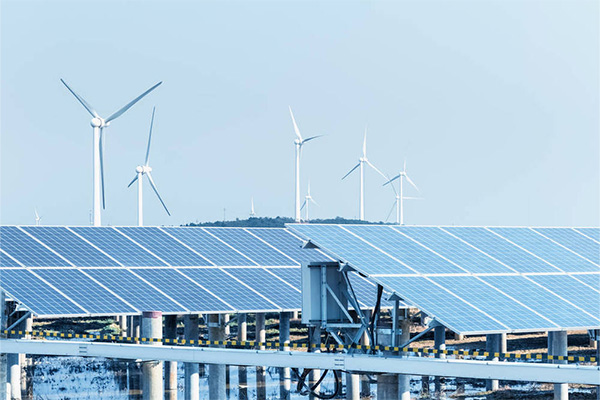
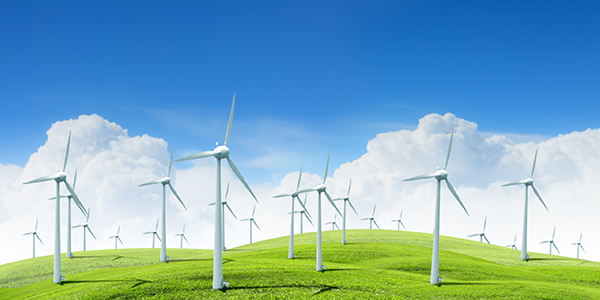
Distributed new energy, a new direction for future energy developmentIn order to achieve the goal of "strive to peak carbon dioxide emissions before 2030 and strive to achieve carbon neutrality before 2060", we will strive to build a clean, low-carbon, safe and efficient energy system, improve the level of clean energy utilization and the operating efficiency of the power system, and implement New development concepts, better play the role of source-grid-load-storage integration and multi-energy complementarity in ensuring energy security, actively explore its implementation path, accelerate the construction of a new power system with new energy as the main body, and vigorously improve the consumption of new energy and storage capacity. However, the volatility, intermittent, and random characteristics of new energy power generation are very obvious. When a high proportion is connected to the power grid system, fundamental changes in the intelligence and flexibility of the power grid system are required. Therefore, the large-scale application of renewable energy must consider the system integration of multiple energy sources, with wind and solar resources as the main resources for power generation and energy supply, and nuclear power, hydropower and other comprehensive and complementary non-fossil energy sources as "stable power sources." Use a small amount of thermal power as emergency power or regulated power, build a new power system management and operation system through renewable energy power prediction technology, power system stability control technology, power system flexible interaction technology, etc., and vigorously promote "new energy + energy storage", Support the rational allocation of energy storage systems for distributed new energy sources, and actively develop source-grid-load-storage integration and multi-energy complementary projects.
On February 25, 2021, the National Development and Reform Commission and the National Energy Administration issued the "Guiding Opinions on Promoting the Integration of Power Sources, Grids and Loads and Storage and the Complementary Development of Multi-Energy" (Fagai Energy Regulations [2021] No. 280) focusing on The importance, overall requirements, implementation paths, implementation priorities and policy measures of power source grid load storage integration and multi-energy complementation. **In terms of promotion, the importance of promoting the integration of power source, grid and load storage and multi-energy complementation is put forward; Secondly, the overall requirements for the integration of power source, grid, load and storage and multi-energy complementation are clarified; In the third aspect, the implementation path and key points of the integration of source, grid, load and storage are proposed; In the fourth aspect, the implementation path and key points of multi-energy complementary power are proposed; In the fifth aspect, policies and measures for power source grid load storage integration and multi-energy complementation are proposed.
On April 25, 2021, the General Affairs Department of the National Energy Administration issued the "Notice on Submitting the Work Plan for Integration of Power Source, Grid, Load and Storage and Multi-energy Complementarity during the "14th Five-Year Plan"" to the provincial and municipal development and reform commissions and energy bureaus to clarify the future energy industry and The development direction of new power systems: 1. Implement the consumption capacity of renewable energy; 2. Give full play to the role of inter-provincial power transmission channels; 3. Coordinate and optimize various power resources; 4. Steady implementation of integrated wind, solar, thermal and storage projects; 5. Encourage the integration of wind and solar water storage and wind and solar storage.
New power systems based on renewable energy sources such as photovoltaic and wind power are inseparable from the support of energy storage technology. The energy storage industry has also become a key part of the energy revolution. On the one hand, with the continued development of distributed new energy, the peak-to-valley electricity price gap is increasing day by day, and the demand for energy storage on the grid and load side is increasing. On the other hand, energy storage technology provides new ideas and effective technical support to solve the power supply pressure of the power system, improve the stability of the power system, improve the quality of power supply, and reduce users' electricity costs. At the same time, the application of virtual power stations based on energy Internet technology has broadened the potential for distributed energy storage to participate in the power auxiliary service market and increased the commercial return on distributed energy storage investment. Therefore, in countries and regions with open power markets, distributed energy storage is expected to be the first to develop.
The rapid development of distributed photovoltaic + energy storage has provided Huansheng Power with good development opportunities. Based on the application and development of distributed new energy, Huansheng Power relies on photovoltaic power generation technology, energy storage technology, energy Internet technology, etc., and continuously carries out technological innovation with innovative thinking to help industrial parks and industrial and commercial enterprises create comprehensive utilization plans for new energy. Contribute to the cause of green environmental protection. As my country's energy transformation deepens, the development of distributed new energy + energy storage will provide basic guarantees for new energy sources such as photovoltaics and wind power, protect new power systems, and open the way to the scale of new energy storage. What is distributed energy storage
Distributed energy storage is the first link in the distributed energy system. With the booming development of smart grids, renewable energy power generation, distributed power generation and microgrids, and electric vehicles, a large number of distributed power sources are connected to the distribution network. Problems such as randomness and high load caused by distributed systems require corresponding energy storage technology to provide solutions. Therefore, distributed energy storage technology was born. Distributed Energy: It is an energy supply method arranged on the user side that integrates energy production and consumption. It can provide users with multiple energy supplies of hot, cold, and electricity. It has the characteristics of local utilization, clean and low carbon, multiple interactions, flexibility and efficiency, etc. It is a modern An integral and important component of the energy system. Energy Storage Rubik's Cube EssCube
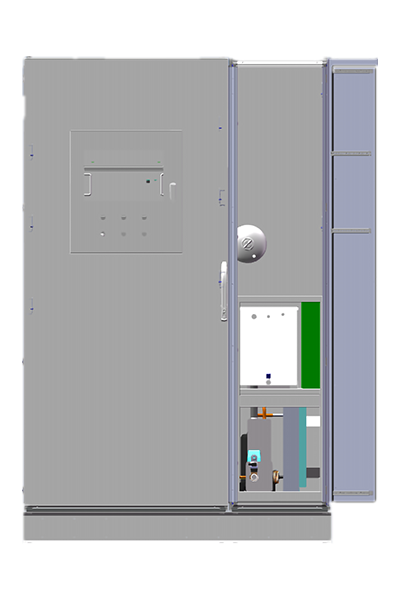
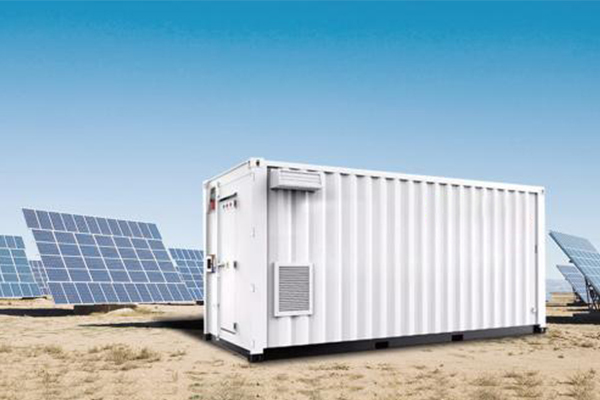
Huansheng Power Energy Storage Cube EssCube adopts the "Multiin-one" design concept, integrating long-life batteries, battery management systems BMS, high-performance converter systems HSPE-PCS-100/0.4, active safety systems, intelligent power distribution systems, thermal The management system is integrated into a single standardized outdoor cabinet to form an integrated plug-and-play smart energy block product. Among them, the HSPE-PCS-100/0.4 modular series energy storage converter (PCS) is a three-level NPC capacitor mid-point split structure three-phase four-wire converter, suitable for bidirectional rectification/ Inverter applications. Compared with the traditional two-level topology energy storage converter, it has the characteristics of low output switching loss and low output current distortion rate (THDi%<3%), which meets the application conditions of unbalanced three-phase load under parallel and off-grid conditions. PCS adopts a modular design, and is assembled with 50/100kW hot-swappable power units and battery clusters in a building block style to form a standard energy storage Rubik's Cube. The parallel expansion of the Rubik's Cube can realize distributed energy storage cabinets and energy storage power stations. Super charging station SCS
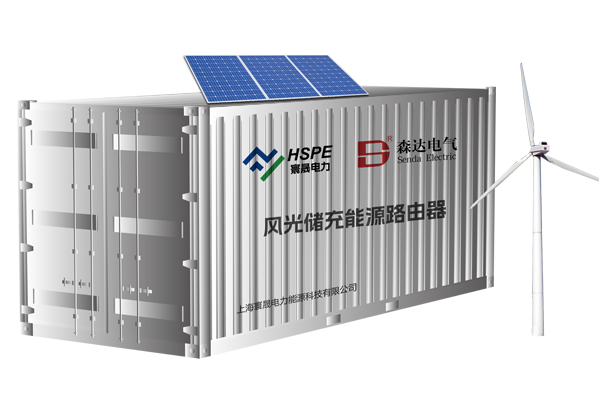
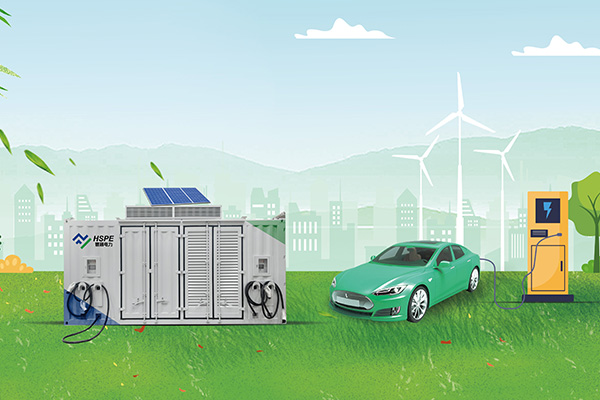
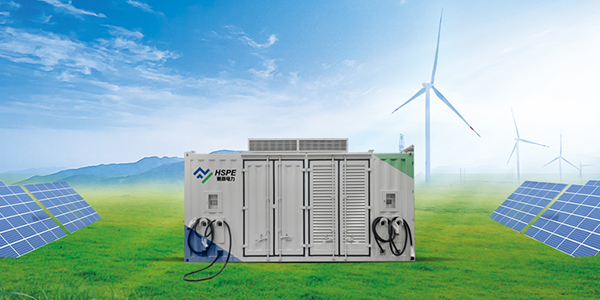
Huansheng Power's high-voltage direct-connection integrated super charging station SCS (Super Charging Station) is a mobile smart energy router for new energy wind, solar, storage and charging DC microgrids, with intelligent, integrated, low-carbon energy and informatization Integrated portable super charging station for wind and solar storage, charging, and replacement. The SCS based on the smart microgrid power router (park level) uses a flexible DC solution to deeply couple new energy sources such as wind, solar and storage, and transfer all the charging peak pressure to the receiving end to achieve real-time matching of the power received by the channel and the local load. It achieves the functions of orderly charging, peak shaving and valley filling, and perfectly solves the problems of insufficient distribution capacity of the power system and instability of the power grid due to impact. Application scenarios of distributed energy storage systems
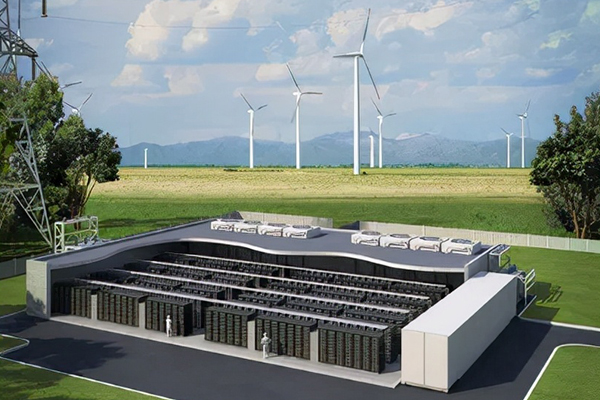
The main application scenarios of distributed energy storage include three aspects: user side, distributed power supply side and distribution side; it can be used for power grid companies, industrial and commercial enterprises with large power demand and energy storage, and areas with high demand for energy storage. and providing services to public buildings. User side: The user side is mainly used for peak shaving and valley filling electricity price arbitrage, photovoltaic + energy storage, communication base station backup power, data center backup power, and construction of microgrids, etc. 1) Backup power supply: Due to its rapid response capability, distributed energy storage systems can be used as uninterruptible power supplies (UPS) to ensure power supply to important loads during power outages. 2) Participate in demand-side response: Based on the peak-valley price difference, it helps users use off-peak electricity without changing their electricity consumption habits, thereby reducing electricity purchase costs. Distributed power supply side: The power generation side is mainly used to smooth new energy power generation and smooth new energy output. The output of distributed energy sources such as wind power and photovoltaics has the characteristics of intermittent, randomness and volatility. The combination of distributed energy storage systems and distributed power sources can greatly improve the operating characteristics of these distributed power sources and suppress their power. fluctuation, enhance power schedulability, and achieve end node voltage control. Distribution side: The grid side is mainly used for peak and frequency regulation, peak shaving and valley filling, and increasing grid stability. 1) Realize load peak shaving and valley filling: use distributed energy storage equipment to discharge during peak load and charge during low load. 2) Grid frequency regulation: Distributed energy storage systems have the characteristics of fast response and high output power control accuracy. Market potential of distributed energy storage systems
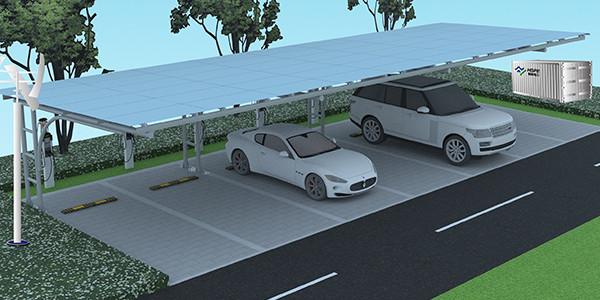
1) The user-side energy storage market needs to be released Judging from the development status, the main applications of energy storage on the distribution side are concentrated in thermal power energy storage frequency regulation and new energy power station configuration energy storage. Among them, on the auxiliary service frequency regulation side, the market capacity is close to saturation; Distributed power side energy storage showed explosive growth in 2018, and was stopped by the State Grid twice in 2019 and reached a deadlock; In terms of user-side energy storage, in the future, with more flexible electricity prices and policy subsidies, and the release of various commercial application scenarios, the user-side energy storage market is expected to be released. 2) New application scenarios will unleash the potential of distributed energy storage New infrastructure and distributed energy systems promote each other. The construction and operation of data centers and 5G base stations has a strong demand for new energy; the popularization of new energy vehicles and electric vehicle charging piles will change the energy consumption model of our cities, form a true energy Internet, and create new opportunities for distributed energy storage equipment. needs. Specific application: The construction of "light storage and charging" integrated charging station is an innovative attempt in the construction of new energy vehicle charging stations. The charging station uses clean energy for power supply and stores electric energy after photovoltaic power generation. Photovoltaics, energy storage and charging facilities form a microgrid, which intelligently interacts with the public grid according to demand, and can realize two different operating modes: grid-connected and off-grid. . Note: Some pictures come from the Internet. If there is any infringement, please contact us to delete it! |