|
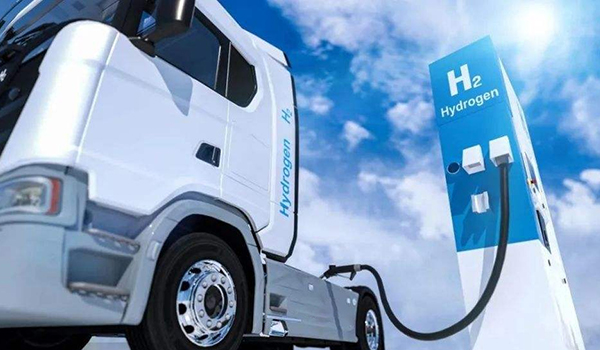
Development status and prospects of hydrogen fuel high-power battery technologyAs the hydrogen energy industry chain gradually matures, the cost of hydrogen for hydrogen production, the hydrogen consumption of hydrogen energy heavy trucks, and the factory price of hydrogen energy heavy trucks continue to decrease, the advantages of hydrogen energy heavy trucks will gradually become more prominent, and the high-power market application of hydrogen fuel cells will There is much to be done. The industry generally believes that as one of the important application areas of high-power fuel cells, hydrogen-powered heavy trucks have advantages over electric vehicles in terms of hydrogenation time and cruising range.
With the rapid development of the world economy, humans have consumed a large amount of non-renewable energy sources such as oil, coal, and natural gas. The resulting environmental pollution, greenhouse effect, and energy reserve shortages have become increasingly serious, which seriously threatens the sustainable development of the world's energy resources. . Therefore, changing the highly polluting use of traditional fossil energy, improving the costs and limitations of renewable energy, and developing clean renewable energy have become key development directions in the world.
To this end, my country proposed the development vision of "reaching carbon peak in 2030 and achieving carbon neutrality in 2060" in 2020. Hydrogen energy has a high combustion calorific value and rich resources, and is regarded as the clean energy with the greatest potential for development in the 21st century. Compared with other renewable energy sources (solar energy, wind energy, ocean energy, etc.), hydrogen energy uses hydrogen fuel. The power converted and output by the battery is of high quality and can be continuously output and stored. Hydrogen fuel cells are the main way to utilize hydrogen energy. They use hydrogen as fuel and directly convert the chemical energy of hydrogen and oxygen into electrical energy through electrochemical reactions. They have high energy conversion efficiency, clean and pollution-free reaction, low operating temperature and long service life. It is long and easy to install and operate. It is a clean and renewable energy utilization method with high conversion efficiency. It is also one of the main directions of world energy development. It is often used as a mobile power source in electric vehicles, submarines and other fields. At present, hydrogen fuel cell technology is developing very rapidly, and there are related researches in various aspects such as hydrogen production and hydrogenation, mobile gas storage, control strategies and stack materials. As breakthroughs are made in materials research, some new materials can optimize or replace traditional materials to improve performance and reduce costs. There have been reviews describing the structure and working principles of each part of the hydrogen fuel cell. Obvious advantages in practical applications
At the 2023 China (Beijing) Hydrogen Energy Equipment and Fuel Cell Industry Conference, participants emphasized that against the backdrop of increasingly obvious electrification trends in urban public transportation, hydrogen-powered heavy-duty trucks with strong endurance and heavy loads have caught up from behind and will Become the "backbone" of the future fuel cell vehicle market. In heavy industrial cities such as Tangshan and Handan in Hebei Province, the relevant industrial planning is mainly based on battery replacement heavy trucks, supplemented by hydrogen fuel cell heavy trucks. However, according to Xiaosheng's observation, since last year, fuel cell heavy trucks have begun to receive more attention. “According to actual feedback from local logistics fleets, battery-replacing heavy trucks are more likely to encounter difficult problems in winter. Due to the cold weather and shorter cruising range, and the fact that industrial heavy trucks often face high-load transportation tasks, the power consumption of battery-replacing heavy trucks continues to rise. Basically, it needs to be recharged after running for fifty or sixty kilometers, and the battery life is very short. Under this circumstance, the advantages of hydrogen fuel cell heavy trucks will become more and more obvious." Commercial applications continue to advance
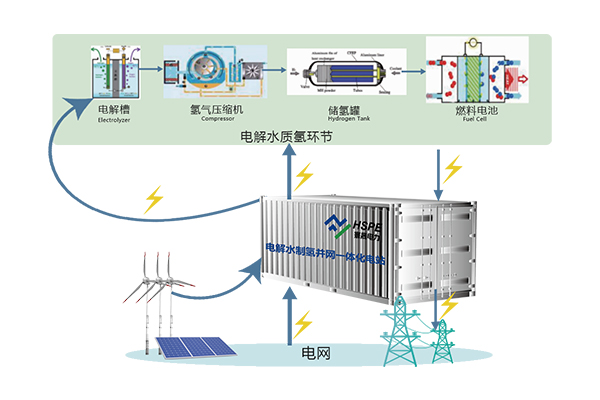
Compared with fuel vehicles and pure electric vehicles, fuel cell heavy-duty trucks must find the easiest market promotion scenarios and open up their own business models. Xiao Sheng believes that fuel cell vehicles have the greatest advantage in terms of large loads. "In the future, to achieve large-scale promotion of fuel cell heavy-duty trucks, we must first reduce the purchase cost and hydrogen usage cost. Judging from the distribution of hydrogen across the country, the entire industry should not be too obsessed with whether hydrogen is produced from green electricity, but should try to find hydrogen sources as close as possible. Develop fuel cells in places where sources and hydrogen are cheaper. Only by first increasing the volume of the entire industry and reducing the cost of a single system or the price of a vehicle can it be more conducive to reducing costs for the entire industry." Currently, more than 95% of the world's hydrogen production comes from fossil fuel reforming, and the production process inevitably emits CO2; about 4% to 5% of hydrogen comes from electrolyzed water, and there is no CO2 emission during the production process. The hydrogen production process is divided into gray hydrogen (hydrogen produced from coal), blue hydrogen (hydrogen produced from natural gas), and green hydrogen (hydrogen produced by electrolysis of water, renewable energy) according to the carbon emission intensity. The original intention of the development of the hydrogen energy industry is zero-carbon or low-carbon emissions. Therefore, gray hydrogen and blue hydrogen will gradually be replaced by green hydrogen based on renewable energy. Green hydrogen is the development direction of the future energy industry. The link of electrolysis of water, gas and hydrogen (grid-connected integrated power station)
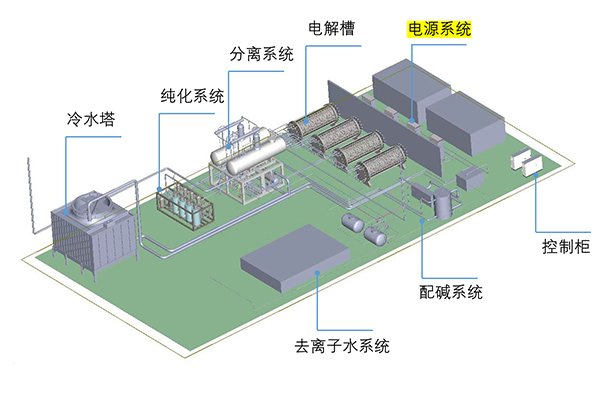
Hydrogen production by water electrolysis means that water molecules are dissociated under the action of direct current to generate oxygen and hydrogen, which are precipitated from the anode and cathode of the electrolyzer respectively. At the technical level, hydrogen production by electrolysis of water is mainly divided into alkaline water electrolysis (AWE) hydrogen production, solid polymer PEM water electrolysis, solid polymer anion exchange membrane (AEM) water electrolysis, and solid oxide (SOE) water electrolysis. See Table 1 for comparison of relevant characteristics. Among them, AWE is the earliest industrialized water electrolysis technology with decades of application experience and is the most mature; PEM water electrolysis technology has developed rapidly in industrialization in recent years, SOE water electrolysis technology is in the preliminary demonstration stage, and AEM water electrolysis research Just starting out. From a time scale perspective, AWE technology is easy to deploy and apply quickly in solving the problem of recent renewable energy consumption; but from a technical perspective, PEM water electrolysis technology has high current density, small electrolyzer volume, flexible operation, and is conducive to rapid change. load, and has good matching with wind power and photovoltaic (power generation has large volatility and randomness). With the promotion and application of PEM electrolyzers, their costs are expected to drop rapidly, which will inevitably be the development trend in the next 5 to 10 years. The development of SOE and AEM water electrolysis depends on breakthroughs in related material technologies. Huansheng's application in hydrogen production
Different hydrogen production products adapt to different high-voltage power supplies. High-efficiency, low-cost, modular alkaline electrolyzers and systems - more suitable for centralized and continuous hydrogen production scenarios, 100-2000Nm3/h alkaline electrolyzer "N drag one" The power of the hydrogen production system ranges from 0.5MW to 10MW; efficient, flexible and modular PEM electrolyzers and systems - more suitable for distributed and flexible hydrogen production scenarios, 5-200Nm3/h PEM electrolyzer "N drag one" "The power of the hydrogen production system ranges from 25kW to 1000kW. Current hydrogen production, hydrogen storage and hydrogen use technologies have the characteristics of large equipment investment, low operating efficiency, poor economic efficiency, and are not conducive to large-scale application. The electrolytic cell hydrogen production power supply and the hydrogen fuel cell grid-connected inverter have single functions and cannot be effectively unified, and the investment is large. The investment in a 5MW 1000m3/h hydrogen production system is at least 2.5 million yuan. Moreover, due to insufficient grid power supply, large-scale power generation cannot be met, and grid consumption capacity is insufficient to meet large-scale hydrogen production. Therefore, Huansheng has launched a low-cost, two-way electric energy flow integrated hydrogen production station with wind, solar, storage, hydrogen and charging. Through the method of special transformer + AC/DC + DC/DC, it can meet the demand for hydrogen production power and hydrogen fuel. Battery grid-connected power generation needs. Advantages of Huansheng integrated hydrogen production station
Polyphase rectification, the AC side harmonics are extremely small, the power factor is >0.95, and it is extremely friendly to the power grid; Strong dynamic adjustment ability, adjustment time <10ms; Low equipment investment cost and low operating cost; The comprehensive conversion efficiency of the system is high, >96%; Four-quadrant rectification can support rectified hydrogen production and hydrogen energy power generation and grid connection. Future Outlook of the Hydrogen Fuel Cell Industry
In recent years, with the encouragement of technological development and policies, my country's basic technical research on hydrogen fuel cells has become relatively mature, and some material parts have achieved large-scale production. However, due to the late start of my country's fuel cell industry, the weak foundation of key materials, and the incomplete development of the industrial chain, there are relatively few research and projects involving cutting-edge technologies. Compared with developed countries such as the United States, Japan, and Germany, in terms of cutting-edge technologies, There is still a big gap, especially the key materials and advanced components of stacks and bipolar plates that are difficult to achieve mass production and processing. Commercially used materials such as proton exchange membranes, electrocatalysts, carbon fibers, and bipolar plates are very dependent on foreign imports, which has severely restricted the development of my country's hydrogen fuel cell industry. At the same time, large amounts of material imports also increase the production costs of hydrogen fuel cells. As a major manufacturing country, our country should first catch up with leading countries in these key material technologies. Only by taking the lead in mastering advanced technologies can we achieve real industrial breakthroughs and not be restricted by other countries. my country's market is vast, and many new materials can be produced on a small scale and put on trial market after experimental simulations, further promoting the development of the hydrogen fuel cell technology industry. The energy issue is imminent. In order to realize my country's development vision of "carbon peaking and carbon neutrality" and implement the "New Energy Vehicle Industry Development Plan (2021-2035)", R&D investment in scientific research institutions and related enterprises should be strengthened and vigorously carried out Transformation and application of PEM, electrocatalysts, carbon fiber paper, BPs and other components; formulate scientific industrial planning, seize advantageous resources, fully develop the hydrogen fuel cell industry chain, systematically formulate industry systems and standards, and improve hydrogen fuel cells and hydrogen production and storage. The development level of hydrogen and other related industries. Note: Some pictures come from the Internet. If there is any infringement, please contact us to delete it! |